

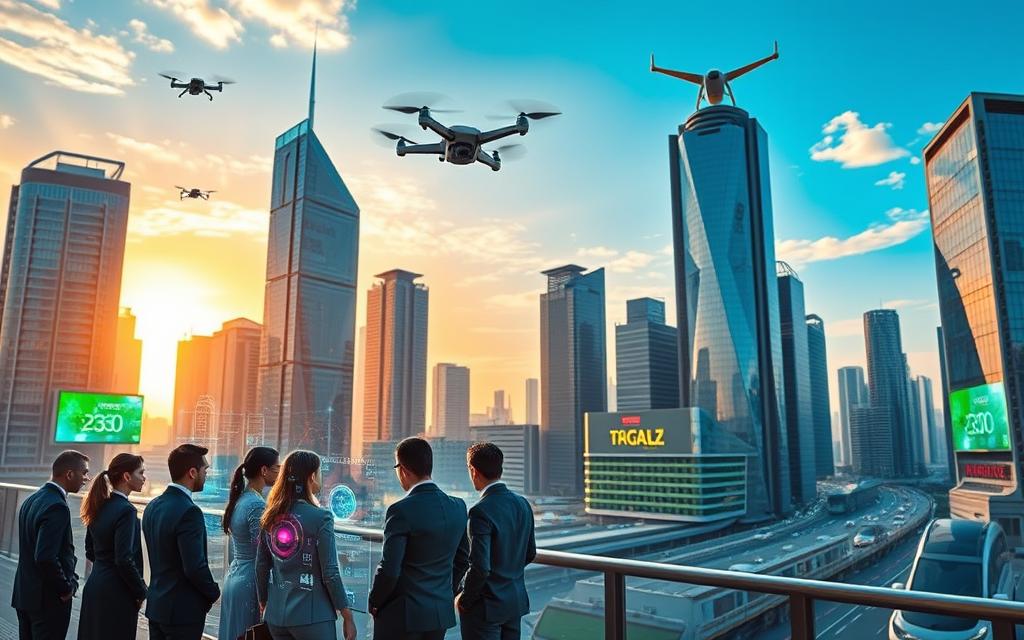
Technology innovation is about creating and using new or better systems. These systems lead to big improvements in many areas. They help make new tools and ways of doing things that change our world.
These changes are very important for today’s society. They change how we live, work, and interact with our surroundings.
The growth of impactful technologies helps the economy and society. They change healthcare and how we talk to each other, making our world different.
Knowing about defining innovation shows us how tech improves our lives. It helps us see what really changes things for the better.
The Evolution of Technological Impact
Humanity’s journey through technology is a story of constant growth and change. It has reshaped how we live, work, and interact with the world.
From Industrial Revolutions to the Digital Age
The move from mechanical to digital technologies is a major turning point. The first industrial revolution brought steam power and changed how we work and live.
Later, electricity, mass production, and automation came along. Each step built on the last, speeding up progress and change.
The digital age came next, turning old ways into new digital ones. This allowed for faster data handling and global connections.
Key Historical Milestones in Innovation
Some big innovations have shaped our world:
- 1760s: Steam engine started the first industrial revolution
- Late 1800s: Electricity and phones changed how we talk
- Mid-1900s: Semiconductors led to computers
- 1989: The World Wide Web changed how we share info
The Internet and World Wide Web changed how we talk and shop. They brought us instant info and new ways to connect.
Paradigm Shifts in Technological Adoption
How we adopt new tech has changed a lot. Old tech took years to catch on, held back by making and getting it out.
Now, digital tech spreads fast. Smartphones quickly became common in just five years, a big change from before.
This fast adoption is due to:
- Better making and getting tech out there
- New tech often uses what’s already there
- People are more used to new tech
- More users make tech more valuable
These changes show how tech keeps getting better faster. Each new thing helps the next one come along quicker.
Knowing our tech history helps us understand today’s tech and what’s coming. The digital world we live in today is built on centuries of innovation and change.
Defining What Is Important Technology
Identifying key technologies means looking beyond just new ideas. We need to see if they really work and make a difference. Not every new invention changes the game, but some do.
This part explains how to tell apart good ideas from truly impactful ones. We’ll look at what makes a technology truly significant.
Core Criteria for Technological Significance
Being important in tech means being both new and useful. As one expert said:
“For an idea to be innovative, it must also be useful. Creative ideas don’t always lead to innovations because they don’t necessarily produce viable solutions to problems.”
This shows the difference between ideas and solutions to real problems. Important technologies must be new and solve big issues.
Several factors help decide if a technology is truly important:
- Can it solve real problems?
- Is it technically possible to use?
- Does it use resources wisely?
- Can it work in different places and situations?
Scalability and Widespread Adoption Factors
Scalability is key to judging a technology’s worth. The best innovations grow and improve over time.
Scalable technologies have special traits that help them spread widely:
- They can be added to easily
- They’re affordable as they grow
- They work well with what’s already there
- They’re easy for anyone to use

How widely a technology is adopted also shows its value. When many people start using it, it’s clear it’s worth it. This shows it’s not just a flash in the pan.
Economic and Social Value Measurements
Measuring a technology’s impact helps us understand its importance. We need to look at both its economic and social effects.
Looking at a technology’s economic side involves several factors:
| Measurement Category | Key Indicators | Assessment Methods |
|---|---|---|
| Market Impact | Revenue generation, market share growth | Financial analysis, market research |
| Efficiency Gains | Cost reduction, productivity improvement | Operational metrics, ROI calculations |
| Employment Effects | Job creation, skill development | Labour statistics, industry surveys |
| Investment Attraction | Funding rounds, valuation increases | Financial reporting, investment analysis |
Measuring a technology’s social impact is harder but just as important. We look at both numbers and people’s experiences:
- Does it improve life for many people?
- Is it good for the environment?
- Does it help people learn and grow?
- Does it make people healthier?
Technologies that do well in both areas are truly significant. They make a lasting difference, not just a quick splash.
The most important technologies change the game in big ways. They affect the economy and society in lasting ways. This is what sets them apart from just fleeting trends.
Artificial Intelligence and Machine Learning
Modern technology is changing fast thanks to new ideas in computational intelligence. These systems can do things we thought were only in science fiction. They change how we talk to machines and understand information.
Fundamentals of AI-Driven Innovations
At the heart of today’s AI is machine learning, mainly deep learning. These smart algorithms learn from huge amounts of data without being told how. They get better with time.
Deep learning has changed many areas. Neural networks can spot complex patterns in data. This has made image recognition and understanding language much better.
Natural Language Processing in Modern Applications
NLP is everywhere in our lives. Virtual assistants like Siri and Alexa use it to get what we say. Chatbots in customer service also use it to talk to us.
Now, we can translate languages almost as well as humans. Tools can even tell how people feel about things on social media. These examples show how machine learning changes how we talk to computers.
Computer Vision’s Role in Industry Transformation
Computer vision lets machines see and understand pictures. Factories use it to check quality and find problems. Self-driving cars also use it to stay safe on the road.
AI has made medical images better too. Doctors can spot problems more easily. Security systems use it for face recognition.
Stores use computer vision for keeping track of stock and understanding customers. This shows how wide-reaching AI’s impact is.
Ethical Considerations in AI Implementation
AI is moving fast, but we need to think about ethics. There’s a big worry about bias in algorithms. It’s hard to see how complex systems make decisions.
There’s also a big issue with privacy. AI deals with a lot of personal data. We need rules to make sure it’s used right.
Companies should test AI for bias. Teams with different backgrounds can make AI fairer. Regular checks help make sure AI treats everyone the same.
Working together, we can make AI better. We want to keep up with new tech but also protect society.
Blockchain and Distributed Ledger Technologies
Blockchain technology is famous for cryptocurrencies, but it’s used in many other ways now. It helps make systems more transparent, secure, and efficient in different industries.

Expanding Use Cases Beyond Cryptocurrency
Companies all over the world are finding blockchain solves big problems in data and transactions. It keeps records safe and lets people see information in real-time.
Some areas where blockchain is making a big difference include:
- Healthcare records management
- Intellectual property protection
- Voting systems security
- Real estate transactions
Enhancing Supply Chain Transparency
Supply chains today involve many people and places. Blockchain makes a permanent record of every step, from start to finish.
Big names like Walmart and Maersk use blockchain to track food and shipping. It cuts down on fraud, improves quality, and speeds up solving problems.
“Blockchain provides the digital trust layer that modern supply chains desperately need”
Customers also win. They can check where products come from and if they’re real. This was hard to do before.
Smart Contracts for Business Efficiency
Smart contracts are a big deal in blockchain. They do things automatically when certain things happen, cutting out middlemen and speeding things up.
Smart contracts offer:
- Automatic payments when things are delivered
- Less paperwork and fewer mistakes
- Quick fixes to problems with clear records
- Strong security thanks to code
Insurance and real estate are just starting to use smart contracts. They make claims and property sales faster and more secure. This shows how blockchain can really help businesses.
As developers get better at making smart contracts, we’ll see even more changes. These systems are changing how we handle agreements and transactions online.
Internet of Things (IoT) and Enhanced Connectivity
The digital world is changing fast with devices that talk to each other over networks. This big change is how we use technology and live in our world.
IoT Integration in Smart Cities and Homes
Today’s cities are getting smarter with IoT technology. They use connected devices to make traffic better, save energy, and keep people safe.
At home, IoT makes our houses smart. We can control things like thermostats, security, and appliances from anywhere.
Advanced Sensor Technologies and Data Utilisation
IoT works thanks to smart sensors. They gather info on the environment, how things work, and what we do.
Using this data wisely is key. It helps industries avoid problems before they start. It also makes supply chains better by watching over goods and transport.
The Impact of 5G on IoT Ecosystems
5G networks make IoT even better. They offer fast, reliable connections. This lets more devices work together in smaller areas.
5G also means devices can talk to each other almost instantly. This opens up new possibilities for fast data use.
With 5G, devices use less energy. This makes IoT more efficient. It also brings new ideas to life that were hard to do before.
5G helps cities too. It makes public services and managing the city better. This shows how connectivity keeps getting better and more useful.
Quantum Computing Advances
Quantum computing is at the forefront of new technology. It could change how we solve problems. This field works differently than traditional computers.
Understanding Quantum Computing Principles
Quantum computers use qubits, not the usual bits. Qubits can be more than 0 or 1 at the same time. This lets quantum computers handle lots of data at once.
Entanglement is another key idea. When qubits are entangled, they connect, no matter the distance. This means changes to one qubit affect the other instantly. It helps with complex calculations.
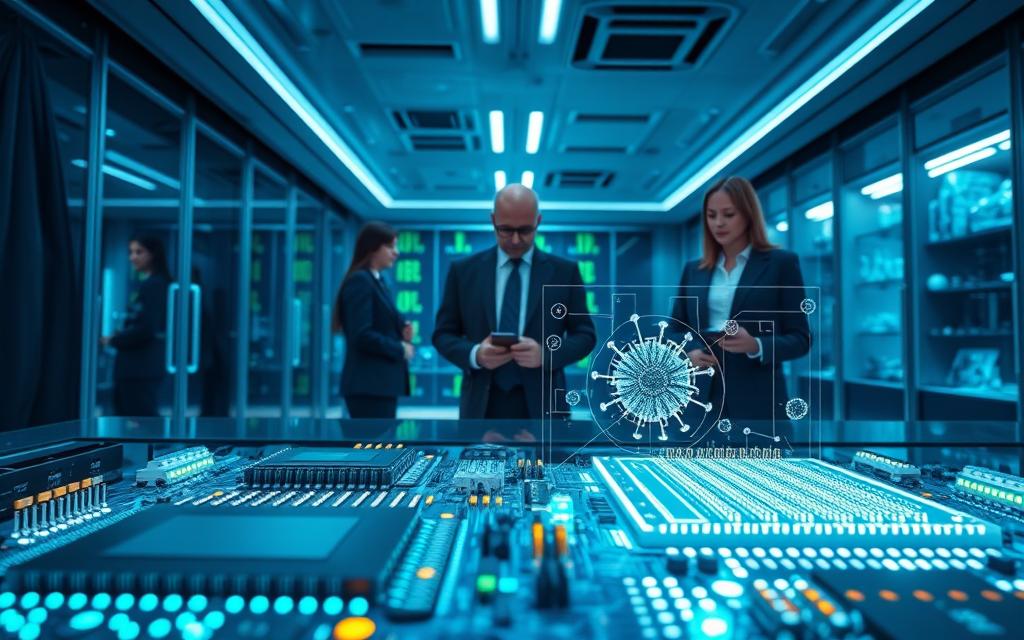
These quantum ideas lead to big breakthroughs. For example, drug companies could find new treatments faster. They can simulate how molecules work.
In materials science, researchers can test new materials virtually. This could lead to breakthroughs like superconductors at room temperature. Or better batteries.
Cryptography is both a challenge and an opportunity. Quantum computers might break current codes. But they could also make new, unbreakable ones. This is very important for keeping data safe.
Modeling complex systems is the most exciting area. Climate scientists could do detailed simulations. Financial analysts could understand global markets better. These advances could solve problems that are too hard for regular computers.
But, there are technical hurdles to overcome. Keeping qubits stable and reducing errors is hard. Yet, scientists and tech companies are making progress. We might see big changes in the next 10 years.
Renewable Energy Technologies
Solar and wind technologies have seen huge improvements in recent years. These advancements make renewable energy a strong alternative to fossil fuels. The sector’s fast growth tackles both environmental and economic issues.
Innovations in Solar and Wind Power
Solar power has made big strides in panel efficiency and cost. New materials like perovskite cells beat traditional silicon panels in efficiency. This makes solar power more affordable for homes and businesses.
Wind energy has also made great leaps forward. Bigger turbines and smarter systems capture more wind energy. Offshore wind farms now power coastal areas.

Manufacturing has become more efficient, cutting down on waste. These changes have lowered costs and sped up deployment. The sector keeps growing thanks to ongoing research and development.
Developments in Energy Storage Systems
Energy storage systems tackle the ups and downs of solar and wind power. Modern batteries provide a reliable backup when energy is low. Lithium-ion batteries lead the market, but new options are coming.
Grid-scale storage helps integrate more renewables into the grid. These systems balance supply and demand. Pumped hydro storage is key for managing large amounts of energy.
New thermal storage solutions capture excess energy for later use. Molten salt systems and others are promising for industry. The variety of storage options ensures reliability for different needs.
| Technology Type | Efficiency Rate | Cost per kWh | Implementation Scale |
|---|---|---|---|
| Solar Photovoltaic | 22-24% | $0.03-0.06 | Residential to Utility |
| Wind Turbine | 45-50% | $0.02-0.05 | Community to Utility |
| Lithium-ion Storage | 85-95% | $0.15-0.25 | Residential to Grid |
| Flow Batteries | 75-85% | $0.20-0.35 | Commercial to Grid |
| Thermal Storage | 60-70% | $0.10-0.20 | Industrial to Utility |
The mix of better generation and storage creates a comprehensive clean energy ecosystem. This integrated system cuts down on fossil fuel use. It also lowers carbon emissions and air pollution.
These tech advances also bring economic benefits. Renewable energy projects create jobs in many areas. They help countries become more energy independent.
Future work will likely improve current systems and explore new materials. Research aims to make solar cells more efficient and wind turbines bigger. The renewable energy field is set to become even more sustainable and accessible.
Biotechnology and Health Tech Innovations
Modern healthcare is changing fast thanks to biotechnology and digital health. These new ideas are opening up possibilities for treatments and diagnoses. They were once thought to be science fiction.
CRISPR and Genomic Editing Techniques
CRISPR technology is a big deal in biotechnology. It lets scientists edit DNA with great precision. This could help treat genetic diseases and create new crops.
The CRISPR-Cas9 system works like molecular scissors. It can cut DNA at specific spots. Then, scientists can add or change genetic material with high accuracy. This could lead to medicines made just for you.
Genomic editing is also changing agriculture and the environment. Scientists are making crops that are better for you and can fight off pests. This could solve food problems and help the planet.
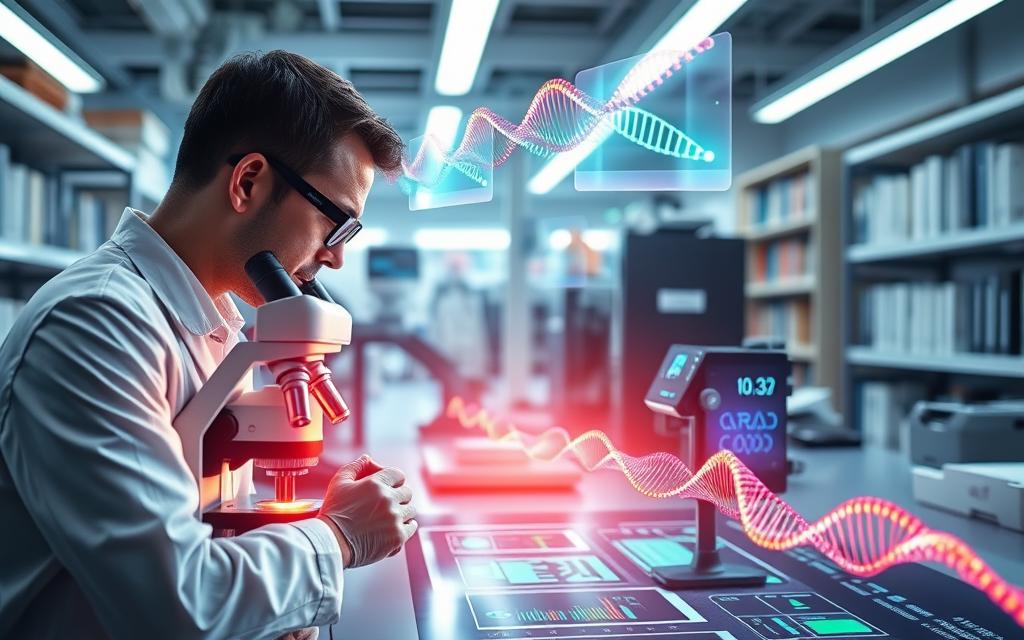
Telemedicine has grown a lot, thanks to global health issues. It lets people talk to doctors online. This makes healthcare easier to get, even for those in remote areas.
Today’s digital health platforms do more than just video calls. They help manage medicines, schedule appointments, and access health records. Some even use AI for quick health checks before you see a doctor.
Wearable tech and telemedicine work together to monitor health. These devices track important health signs in real-time. This helps doctors give better care and treatment plans.
These health tech tools are great for managing long-term illnesses and after surgery care. They let patients get help without always going to the hospital. This saves money and improves life quality. It also helps with big health studies.
The future of healthcare is combining biotechnology with digital health. This mix will lead to better treatments, earlier diagnoses, and care that fits you. It will also be more accessible to everyone.
Robotics and Automation Systems
The mix of artificial intelligence and robotics is changing how we make and move things around the world. These advanced systems are key to modern manufacturing and supply chain management.
Industrial Robotics and Manufacturing
Industrial robotics has grown from simple tasks to complex, smart operations. Today’s robots in factories are precise, flexible, and efficient. They help makers meet market needs fast and keep quality high.
Now, robots use smart sensors and learning algorithms for quick adjustments. This cuts down on mistakes and boosts quality. Robots that work with people, called cobots, also make workplaces safer.
Factories with advanced robots see big benefits like:
- They work all the time with little stoppage
- Products are more consistent and have fewer flaws
- Jobs are safer because robots handle risky tasks
- They can make different products more easily
Autonomous Systems in Logistics and Delivery
Autonomous systems are changing how we move goods and packages. They include self-driving vehicles, drones, and smart warehouses that work together.
Autonomous systems in logistics have made things more efficient in several ways:
- They manage stock and track items in real-time
- They find the best routes to save time
- Drone delivery makes getting packages to you faster
- They cost less because they need less human help
This change in how goods move is big. Self-driving vehicles and drones can handle tough routes and talk to central systems. 5G technology helps them make decisions fast.
Smart warehouses use robots for managing stock, packing orders, and shipping. These places can handle orders quickly and accurately. They meet the needs of online shopping and fast production.
Cybersecurity in the Modern Digital Landscape
Organisations face big challenges in keeping their digital assets safe from advanced cyber threats. The modern world’s connected systems need strong cybersecurity plans. These plans must tackle both tech weaknesses and follow the law.
Strategies for Cyber Threat Mitigation
Good threat mitigation starts with knowing your risks. Companies should find and fix their system’s weak spots before hackers do. This includes:
- Regular security checks and scans for vulnerabilities
- Training staff on how to spot phishing scams and follow security rules
- Using multi-factor authentication on all systems
- Creating plans for what to do if a breach happens
These steps are key to a strong security stance. They help keep businesses running smoothly and protect important data.
AI-Enhanced Security Tools and Protocols
Modern AI security tools change how we fight cyber threats. Machine learning looks for unusual patterns in networks that might show attacks. These tools can:
- Spot security issues before they happen
- Automate responses to known threats
- Learn from new attack methods
- Lower false alarms with better pattern recognition
Advanced digital protection protocols use AI to adapt security. These systems grow with new threats, keeping up with the fight.
Using these technologies means thinking about who owns the ideas. Companies must protect their secrets while following the law.
AI in security is a big step forward. It helps organisations keep up with ever-smarter cyber threats.
Conclusion
The journey through impactful technologies shows a world changed by innovation. From artificial intelligence to renewable energy, these advancements shape our world. They are more than tools; they are the foundation of our society.
Technology innovation boosts economic growth in many areas. It creates jobs and increases long-term wealth. These systems make things more efficient and open up new possibilities.
Our future depends on keeping technology advancing and using it ethically. New trends will tackle global issues. They will bring new chances for growth in different industries.
This summary highlights technology’s role as essential infrastructure. It supports society as much as physical structures. It improves communication and helps share data worldwide.
Looking ahead, technology will keep changing what we can do. It will solve big problems and open up new areas for us to explore and grow.