


Our lives today are deeply connected to digital devices and platforms. Smartphones and social media promise to keep us connected and make life easier.
But, there’s a darker side to these benefits. Many people face serious negative effects of technology on their health and happiness.
The digital downsides affect many parts of our lives. Too much screen time harms our bodies, and constant distractions hurt our focus.
Even though we’re more connected online, our real-life friendships can suffer. This article looks into the technology drawbacks that harm millions worldwide.
We’ll see how our digital habits affect our health, relationships, and brains. Knowing these issues is the first step to using technology in a healthier way.
The Pervasiveness of Digital Technology in Modern Society
Digital devices have become a big part of our lives. They are not just tools anymore but a big part of our daily lives. This digital technology prevalence has changed how we talk, work, and see the world.
The Shift Towards Constant Connectivity
Going from occasional internet use to constant connectivity is a big change. We used to plan our online time, but now we’re always online. This is thanks to fast internet, mobile data, and Wi-Fi everywhere.
This change has made us expect quick answers, both at work and in our personal lives. Being able to reach anyone anytime has changed how we talk and interact with each other.
Related Posts:
- How Technology Affects Family Communication…

- How Science and Technology Affect Our Lives Shaping…

- How Technology Changed the Way People Communicate…

- Does Technology Benefit Society Weighing the Pros and Cons

- How Technology Affects Our Daily Lives An Essay on…

- What Is Important Technology Defining Impactful Innovations

Smartphone Saturation and Always-On Culture
Almost everyone in developed countries has a smartphone. These devices are our main way to access the internet, news, and social media.
The always-on culture means we’re always connected. Notifications keep us busy all day and night. This constant connection has changed how we work, socialise, and even see our personal space.
The Normalisation of Screen Time Across All Ages
Screen time is now common for everyone, from kids to older adults. Young ones start with digital devices early, and older people use them for staying in touch and learning.
This screen time normalisation means we spend hours a day looking at screens. Schools use tech in learning, work relies on digital tools, and fun activities often involve screens.
The widespread acceptance of lots of screen time has happened quietly. It’s one of the biggest changes of our digital age, with little talk about its long-term effects.
How Technology Is Bad for Our Physical Health
Digital devices are handy but can harm our health if used too much. They lead to problems like poor sleep and less physical activity. These issues affect millions of people worldwide.

Sedentary Lifestyles and Associated Risks
Today, we spend a lot of time sitting, whether at work or watching TV. This sedentary lifestyle can cause serious health problems over time.
Reduced Physical Activity Leading to Weight Gain
Screen time replaces active activities, burning fewer calories. Studies show that watching TV for an hour can increase obesity risk by 2%.
Online shopping and food delivery apps also reduce our need to move. This mix of less activity and more calories eaten can make it hard to manage weight.
Increased Incidence of Repetitive Strain Injuries
Using devices a lot can cause new health problems. These issues can become serious if not treated early.
- Text neck: Chronic neck pain from looking down at devices
- Smartphone thumb: Tendon inflammation from repetitive scrolling
- Computer vision syndrome: Eye strain from prolonged screen exposure
These issues are new versions of old repetitive strain injuries. They are linked to how much we use technology.
Sleep Disruption and Circadian Rhythm Problems
Technology can mess up our sleep, leading to poor quality sleep. Devices that keep us connected can stop us from getting good rest.
Blue Light Exposure and Melatonin Suppression
Devices like phones and computers give off blue light. This light makes our brains think it’s daytime, lowering melatonin levels. Melatonin helps us sleep.
“Evening exposure to LED screens significantly delays melatonin onset and reduces sleep duration in adults.”
Many people find it hard to fall asleep after using devices in the evening. They don’t know that their tech habits cause this.
The Impact of Notifications on Sleep Quality
Notifications can wake us up during the night, disrupting sleep. Many keep their phones close while sleeping, responding to alerts without waking up.
This disrupts sleep, making us tired and less focused during the day. Constantly being connected can harm our health by reducing quality sleep.
Knowing how technology affects our health helps us use it wisely. We can take steps to protect our well-being.
Negative Effects on Mental Health and Wellbeing
Technology affects our mental health deeply. The constant use of digital devices has brought new challenges. Mental health experts and users face these issues together.
Anxiety, Depression and Technology Use
Studies show a link between too much tech use and mental health problems. The American Psychological Association found that more screen time leads to higher anxiety in teens and adults.
Social Media Comparison and Self-Esteem Issues
Platforms like Instagram and Facebook make us compare our lives to others’ highlights. This can make us feel bad about ourselves and lower our self-esteem.
Research shows that those who use social media a lot feel worse about their bodies. Seeing perfect bodies online sets unrealistic beauty standards. This harms our self-image.
The digital world sends us endless updates and info. This can overwhelm our brains, leading to mental fatigue.
Experts call this “cognitive overload.” Our brains can’t handle all the digital noise. This constant alertness leads to anxiety and stress.
Addiction Patterns and Behavioural Changes
Technology is designed to keep us hooked. It uses psychological tricks to make us use it more. These tricks are similar to those in traditional addictions.
Smartphone Dependency and Nomophobia
Nomophobia is the fear of being without a phone. It causes anxiety and compulsive checking. This fear is common and growing.
Being addicted to phones means we seek digital validation. Social media’s design makes it hard to stop using it. It uses rewards that keep us coming back for more.
Gaming and Social Media Addiction Mechanisms
Games use rewards to keep us playing. These rewards trigger dopamine in our brains. It’s like a drug addiction.
Social media uses similar tricks. Features like endless scrolling and rewards keep us engaged. These designs play on our psychology, making it hard to stop.
The World Health Organisation now sees gaming disorder as a mental health issue. This shows how serious technology addiction is. It affects our daily lives.
The Erosion of Social Skills and Personal Relationships
Our digital age has changed how we connect, leading to subtle but big changes in our social skills. The ease of instant messaging and social media has a cost to our human connections. It affects both casual chats and deep relationships.
Decreased Face-to-Face Interaction
The digital revolution has changed how we socialise, with many choosing screens over face-to-face meetings. This change affects our ability to form and keep meaningful connections deeply.
Replacement of Physical Socialisation with Digital Communication
Text messages and social media have taken over coffee meetings and phone calls. Digital tools are convenient but lack the richness of being there in person. They miss the subtle body language, tone, and spontaneous reactions that help us understand each other.
Research shows that digital communication effects include less emotional connection and misunderstandings. Without visual cues, we often misinterpret things that wouldn’t happen in person.
Young people with lots of screen time show worrying trends in empathy. Constant device use stops them from learning social skills in real life.
- Reduced ability to read facial expressions
- Difficulty interpreting tone of voice
- Limited practice with conversational turn-taking
- Weakened capacity for emotional resonance
As noted in recent analysis, these social understanding deficits can harm personal and professional relationships long-term.
Family Dynamics and Quality Time
Technology has changed family life, often making shared experiences less meaningful and weakening family bonds.
Device Use During Meals and Social Gatherings
Family dinners, once key bonding times, now often involve screens. This distraction stops meaningful talks, turning meals into individual activities instead of shared experiences.
Studies on family dynamics technology impacts show that device-free meals lead to:
- Better communication patterns
- Stronger emotional connections
- Improved conflict resolution skills
- Enhanced family cohesion
Parent-Child Relationships Affected by Screen Time
Parents’ device use affects children’s emotional growth and attachment. When parents often check phones, children feel digital notifications are more important than their emotional needs.
This can lead to:
- Reduced parental responsiveness
- Weakened emotional security in children
- Modeling of poor communication habits
- Decreased quality of parent-child bonding
The effects of these technology social skills challenges are significant. While digital tools offer connection, they can't replace the depth and quality of in-person interactions. Anyone researching bad negative impacts may also want to understand facto unwritten industry standard before deciding on the best option. These interactions are key to strong relationships and healthy social development.
Cognitive Impacts and Attention Span Reduction
Our brains face big challenges today because of too much digital stuff and information overload. Studies show our ability to focus for long has dropped a lot in recent years.

Research says our attention span has gone from 12 to just 8 seconds in 20 years. This big drop is linked to more time on digital devices and endless notifications in our lives.
The Multitasking Myth and Productivity Loss
Many think they can do lots of digital tasks at once, but science says no. Our brains can’t really multitask. Instead, it jumps between tasks, making us less good at everything.
Continuous Partial Attention and Its Consequences
Being always half-focused stops us from really focusing on one thing. We’re always distracted, looking at lots of things without really getting them. This messes up our understanding and thinking skills.
Notification Interruption and Task Switching Costs
Every time we get a notification, it messes with our brain. It takes about 23 minutes to get back into deep focus after an interruption. All these distractions throughout the day really cut down our productivity and work quality.
| Task Type | Focused Attention Time | Interruption Recovery Time | Productivity Loss |
|---|---|---|---|
| Complex Analytical Work | 45-60 minutes | 25-30 minutes | 40-50% |
| Creative Tasks | 30-45 minutes | 20-25 minutes | 35-45% |
| Routine Digital Tasks | 15-25 minutes | 10-15 minutes | 25-35% |
Memory Formation and Critical Thinking
Digital tech has changed how we learn and remember things. It’s easier to find info online, which has changed how we learn and remember.
Reduced Information Retention in Digital Age
Knowing info is easy to find online makes us less likely to remember it. This “Google effect” shows how easy access to info changes how we think. We remember where to find info, not the info itself.
Decline in Deep Reading and Analytical Thinking
Online, we tend to skim instead of read deeply. People usually spend only 15 seconds on a webpage before moving on. This hurts our ability to think deeply and understand complex topics.
Studies show deep reading skills have dropped by about 30% for those who use digital devices a lot. This affects our problem-solving and critical thinking in many areas.
“The digital world encourages knowing lots of things but not deeply. It creates a culture of shallow knowledge instead of real expertise.”
These changes in how we think are big challenges for learning, work, and personal growth. It’s important to understand these effects to find ways to keep the good parts of digital tech while fixing the bad.
Privacy Concerns and Data Security Risks
Technology brings many benefits but also big risks for our personal data. The digital world has made privacy and security very challenging.
Surveillance Capitalism and Personal Data Exploitation
Today, we face a new system called surveillance capitalism. It treats our personal data as a way to make money.
Big companies use our data to make money. They do this without always asking us first. This raises big questions about our rights online.
Data Collection Practices of Major Tech Companies
Big tech firms use clever ways to get our data. Often, we don’t even know they’re doing it.
They collect data in many ways, like:
- Tracking what we do online
- Looking at what we say and do
- Following where we go with apps
- Getting our biometric data
Targeted Advertising and Behavioural Manipulation
They use our data to make ads just for us. This can change how we think and act.
Cybersecurity Threats to Individuals
Using technology puts us at risk of cyber threats. These threats get smarter as technology does.
Knowing about these threats is the first step to staying safe. It helps us protect our online world.
Identity Theft and Financial Fraud Risks
Online, it’s easier for thieves to steal our identity. They find weak spots in security to get our info.
When they steal our identity, they can also steal our money. This can cause a lot of trouble and take a long time to fix.
Unauthorised Access to Personal Devices and Accounts
Hackers keep finding new ways to get past our security. They often target our devices and online accounts.
Some common ways they do this include:
- Using weak or the same passwords everywhere
- Accessing unsecured Wi-Fi
- Using old software with known bugs
- Sending fake emails and messages
These technology privacy risks show how important it is to be careful online. The world of data security threats keeps changing, so we must stay alert.
The idea of surveillance capitalism changes how we see our data online. Knowing about it helps us use technology more wisely.
Economic Impacts and Workplace Challenges
Technological advancements lead to big changes in jobs and work life. These changes bring two main issues: jobs lost to technology and new work culture pressures.
Job Displacement Through Automation
Automation is taking over tasks that humans used to do. This change is causing big problems in many industries.
Roles Replaced by Artificial Intelligence and Robotics
Many jobs, like those in manufacturing, are being replaced by robots. Even jobs that need complex skills are being automated.
AI chatbots are now handling customer service instead of people. And, even jobs that need deep thinking are being done by machines.
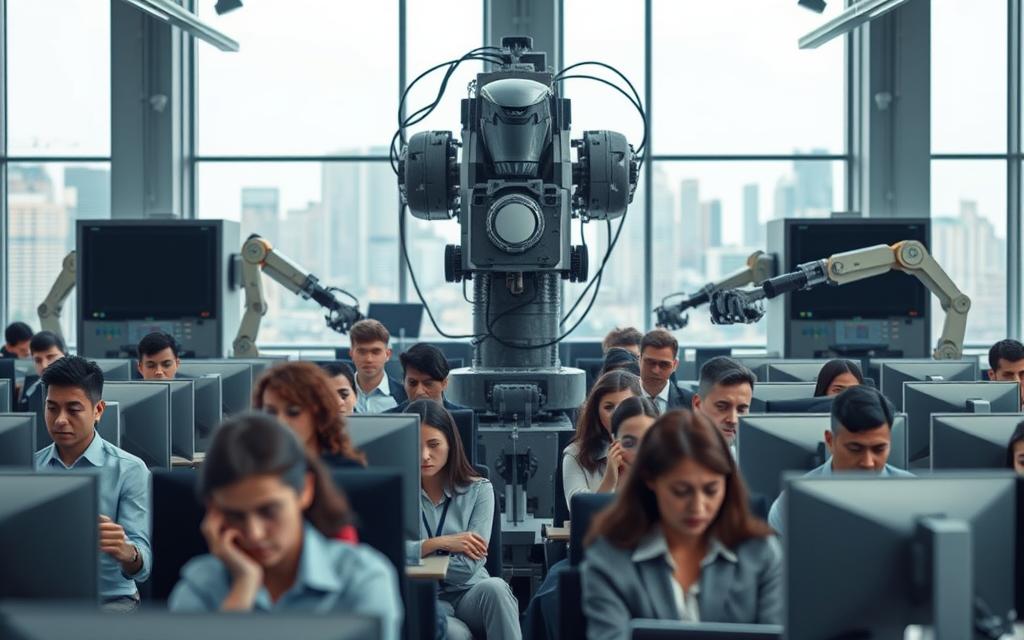
While automation gets rid of some jobs, it also creates new ones. But, many workers don’t have the skills for these new roles.
This skills gap is a big problem for both workers and employers. Companies can’t find the right people for the jobs they have.
| Vulnerable Roles | Replacement Technology | Projected Timeline |
|---|---|---|
| Data Entry Clerks | AI Data Processing | 2024-2026 |
| Assembly Line Workers | Industrial Robotics | 2023-2028 |
| Customer Service Agents | Chatbot Systems | 2022-2025 |
| Basic Accounting Functions | Automation Software | 2024-2027 |
Work-Life Balance Erosion
Being always connected to work is changing how we live. It makes it hard to have personal time.
Always-Available Work Culture and Burnout
Smartphones and messaging apps make us always available. This makes it hard to separate work from personal life.
This constant connection is causing burnout. It leads to stress and makes people unhappy at work.
The Blurring of Professional and Personal Boundaries
Working from home makes it hard to separate work from personal life. Our homes become offices without clear boundaries.
Many find it hard to stop thinking about work. This affects our family life and how we recover from work.
Educational Setbacks and Learning Difficulties
Technology in schools is meant to help, but it often distracts students. It brings challenges for teachers to manage. These issues affect how well students learn now and in the future.
Technology in Classroom Settings
Today’s classrooms use digital tools to help students learn. But, research shows these tools can cause more problems than they solve. Finding the right balance between learning and distraction is hard.
Distraction Versus Enhancement in Learning Environments
Digital devices give access to lots of information but also distract students. They often switch between school work and social media or games. This split attention makes it harder to remember and understand what they learn.
Studies show students with laptops in class do worse than those taking notes by hand. The constant temptation to play games or watch videos takes away from learning time. Even when used for school, using multiple devices at once makes learning less effective.
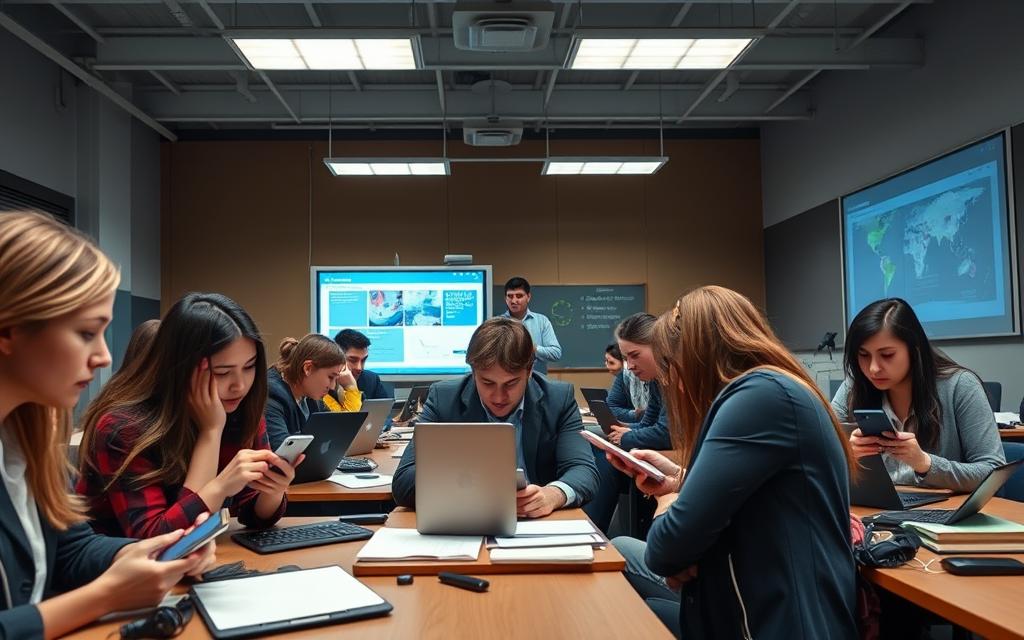
The table below shows how technology can both help and hinder learning:
| Potential Enhancement | Common Distraction | Impact on Learning |
|---|---|---|
| Instant access to information | Constant notifications | Reduced concentration span |
| Interactive learning tools | Social media access | Lower information retention |
| Collaborative platforms | Gaming applications | Diminished academic performance |
| Multimedia resources | Entertainment websites | Shallower cognitive processing |
Cheating and Academic Integrity Issues
Technology has made cheating easier and more common. Students can find essay mills and AI tools online. This undermines the purpose of tests and learning checks.
Online exams are hard to keep honest. Despite monitoring software, students find ways to cheat. This normalisation of cheating raises big ethical questions.
“The very tools designed to enhance education have become the means of its subversion, creating an arms race between technological cheating methods and detection systems.”
Developmental Concerns for Younger Users
Young brains are affected by too much screen time. It changes how they develop compared to traditional play. This affects their thinking, social skills, and feelings.
Screen Time Effects on Early Childhood Development
Too much screen time in young children can cause delays. It affects their language, social skills, and focus. The American Academy of Paediatrics suggests strict limits on screens for kids under five.
Research shows screen time reduces quality time with parents. This time is key for healthy brain and emotional growth. Using tablets during meals or family time cuts down on important talks.
Reduced Creativity and Problem-Solving Skills
Digital games often give quick answers and set outcomes. This is different from traditional play that encourages imagination and solving problems. So, kids with too much tech show less creativity.
Play with real materials boosts creativity and flexibility. Screen activities usually follow set patterns and limits. This difference in how they engage with challenges affects their development.
Technology’s impact on young minds is a big concern for teachers and parents. Finding the right balance between benefits and risks is key for healthy growth. Setting limits and guiding use is the best way to handle technology in schools.
Environmental Consequences of Technology Production
Technology brings many benefits, but it also has big environmental costs. The making, using, and throwing away of electronic devices harm our planet. We need to act fast to solve these problems.

E-Waste Generation and Disposal Problems
Fast-changing technology leads to more electronic waste. People often buy new devices, causing big problems when they throw them away.
The Lifecycle of Electronic Devices
Electronic products have a short life. They become outdated in just two to three years. This means we constantly need new ones, leading to a lot of waste.
Companies make products that can’t be easily updated. This makes us buy new things more often, harming the environment even more.
Toxic Components and Recycling Challenges
Electronic devices have harmful materials like lead and mercury. If not disposed of right, these can pollute soil and water.
Recycling these devices is hard and expensive. The mix of materials makes it tough to separate and recycle them properly.
Only about 20% of electronic waste is recycled, according to studies. This is a big problem that needs fixing.
Energy Consumption and Carbon Footprint
The tech world uses a lot of energy, which adds to global warming. Making and using devices both have big environmental effects.
Data Centre Energy Requirements
Data centres use a lot of electricity to work and stay cool. They use about 1% of the world’s electricity, studies say.
These centres run all the time. This means they always use a lot of power, which is bad for the planet.
Device Manufacturing Environmental Impact
Making electronic devices needs a lot of resources and energy. The process from getting raw materials to making the final product is very energy-hungry.
Creating chips is one of the biggest energy users. It needs lots of water and electricity to work. This is because chips are made in very clean environments that use a lot of energy.
Shipping parts from all over the world also adds to pollution. Most devices have parts made in different countries before they’re put together.
The tech world needs to find better ways to make and recycle devices. Using sustainable practices and circular economy ideas could help solve these big problems.
The Digital Divide and Societal Inequality
Technology has created big gaps in society, not just in health and the environment. The digital divide is a major issue, affecting millions worldwide. It shows how technology can divide us.
Access Disparities Across Demographic Groups
Not everyone has the same access to technology. Money and age play big roles in who gets to use new tech. This creates big gaps in society.
Economic Barriers to Technology Adoption
Many can’t afford the tech they need. Smartphones, computers, and internet are too expensive for some. This stops them from getting ahead.
Without tech, people miss out on education and jobs. More things are moving online, leaving some behind.
Age-Related Digital Literacy Gaps
Older people often find it hard to use new tech. They lack the skills to use modern tools. This makes it hard for them to keep up.
Younger people learn tech skills at school and through friends. This creates a gap where older adults can’t use online services or talk to family easily.
Global Inequalities in Technology Access
Technology access varies greatly around the world. Rich countries have fast internet, while poor ones struggle. This shows how technology can widen economic gaps.
Developed Versus Developing Nation Disparities
Rich countries have almost everyone online. But in poor areas, many can’t get online. This affects billions in Africa, Asia, and Latin America.
Without good infrastructure, tech is hard to reach. In rural areas, lack of power and internet means no access to tech.
Consequences for Education and Economic Opportunity
Not having internet hurts education in poor areas. Students can’t use online learning tools or access important information.
“The digital divide has become the new face of inequality, determining who gets to participate in the 21st-century economy and who remains excluded.”
Not having tech affects a country’s economy. Without tech, countries can’t compete in the global market. They also can’t attract tech companies.
| Region | Internet Penetration Rate | Average Download Speed | Digital Skills Proficiency |
|---|---|---|---|
| North America | 93% | 180 Mbps | Advanced |
| Western Europe | 88% | 150 Mbps | Advanced |
| South Asia | 47% | 25 Mbps | Basic |
| Sub-Saharan Africa | 36% | 15 Mbps | Limited |
We need to work together to fix the digital divide. Governments, companies, and communities must act. If we don’t, technology could make things worse.
Conclusion
Technology has changed our world in many ways, but it also brings big challenges. This article talks about how digital tools affect our health, relationships, and society. It shows how they can cause physical and mental problems.
There are also issues like lost privacy, economic problems, and harm to the environment. The gap between those with and without technology makes things worse. It affects how people access things and opportunities worldwide.
To deal with these problems, we need to find a balance. We should set limits on how much technology we use and be more mindful. Things like having screen-free times and using apps to track our use can help.
Choosing to spend more time in the real world can also make us healthier. It’s important to understand the downsides of technology. This way, we can use it in a way that benefits us without the harm.
Let’s take action to control our digital use. By knowing the problems technology can cause, we can use it wisely. Start by looking at your own habits and making better choices for a healthier life.
FAQ
How does technology contribute to a sedentary lifestyle?
Technology makes us sit for long periods. This includes screen time, desk work, and passive entertainment. It can lead to weight gain, poor posture, and health risks like heart disease and diabetes.
Can using smartphones before bed affect sleep quality?
Yes, smartphones emit blue light that lowers melatonin levels. This hormone is key for sleep. Notifications and the urge to check devices can also disrupt sleep, causing poor quality and sleep disorders.
What is nomophobia and how is it related to technology use?
Nomophobia is the fear of being without a mobile device. It’s a form of addiction linked to too much smartphone use. It’s driven by the need for constant connection and digital communication.
How does technology impact face-to-face social interactions?
Technology often replaces real conversations with digital ones. This can reduce empathy, understanding of non-verbal cues, and deep connections. It can weaken social skills and harm personal relationships.
Does multitasking with technology improve productivity?
No, multitasking reduces productivity and increases errors. It leads to mental fatigue. Our brains struggle to handle multiple tasks at once.
What are the risks of surveillance capitalism?
Surveillance capitalism involves tech companies using personal data for ads without consent. It raises privacy concerns and can manipulate consumer behaviour and opinions.
How is technology affecting job security and employment?
New technologies like automation and AI are replacing jobs, mainly in manufacturing and routine tasks. This creates a skills gap and economic uncertainty for some jobs.
What challenges does technology pose in educational settings?
Technology can distract in classrooms, reducing focus and encouraging cheating. For young users, too much screen time can hinder development, creativity, and problem-solving skills.
What environmental issues are associated with technology production?
Electronic devices contribute to e-waste, which is toxic and hard to recycle. Data centres and manufacturing also use a lot of energy, harming the environment and sustainability.
What is the digital divide and why does it matter?
The digital divide is about unequal access to technology, based on money, age, or location. It limits education and job chances, worsening social and global inequalities.
How does social media usage affect mental health?
Social media can increase anxiety, depression, and low self-esteem. This is due to constant comparison, cyberbullying, and the pressure to present an ideal online image.
Are there health risks associated with repetitive technology use?
Yes, repetitive actions like typing and scrolling can cause injuries like text neck and eye strain. These issues are becoming more common as we rely more on devices.